If you're new to the world of Yixing teapots, you've probably heard the same advice:
“Just buy one that's made from original ore clay and handcrafted.”
Sounds simple, right?
Unfortunately, many beginners end up buying teapots that are unnaturally shiny, overly colorful, or develop an artificial-looking patina after only a few weeks of use. Authentic Yixing Zisha teapots are far more subtle than many people realize.
This quick guide will help you identify potential red flags and make a more informed purchase.
1. Check the Color: Real Zisha Doesn't Look Like It Has an Instagram Filter
Avoid:
❌ Mirror-like shine
❌ Candy-colored clay
❌ Oily or plastic-looking surfaces
Look For:
✅ A natural matte finish
✅ Soft, earthy tones
✅ Texture similar to fine-grained stone or matte chocolate
Authentic Yixing clay comes from mineral-rich ore deposits around Yixing, China. The final color depends on the clay type, ore composition, and firing temperature, but genuine Zisha generally has a restrained, understated appearance rather than a glossy showroom finish.

2. Use a Magnifying Glass: Nature Leaves Clues
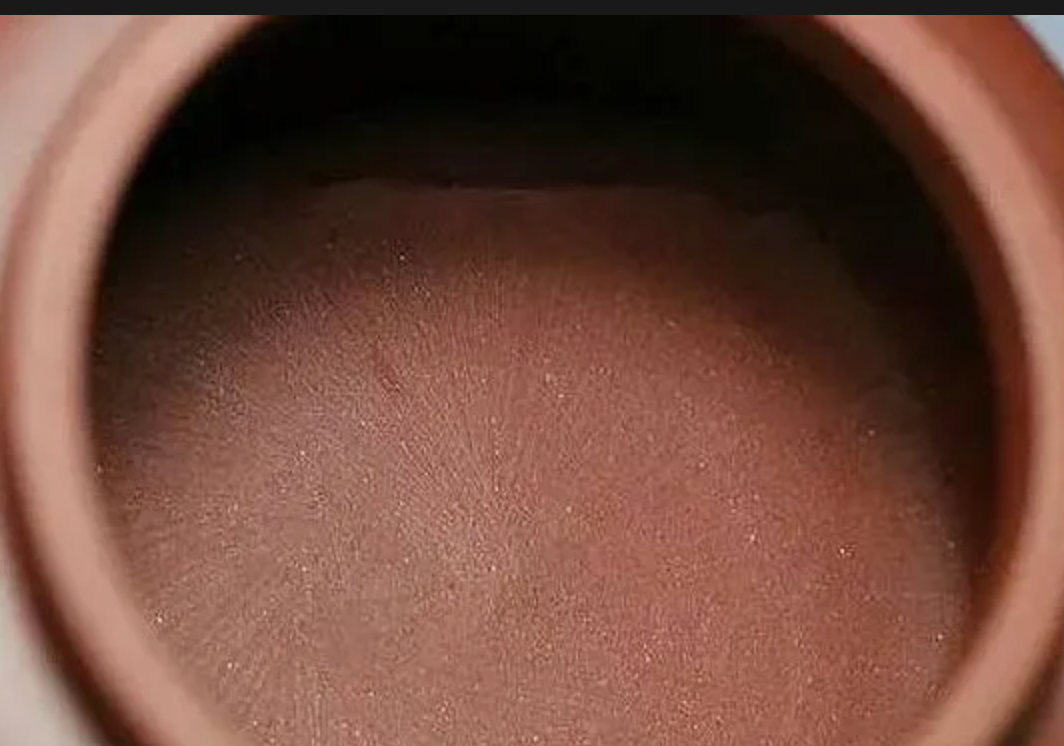
One of the easiest ways to inspect a teapot is to look closely at the clay surface.
Genuine Zisha Often Shows:
① Visible Mineral Particles
Tiny particles appear embedded within the clay rather than painted on the surface. Think of the texture inside an Oreo cookie rather than smooth plastic.
② Dark Iron Spots
Natural iron-rich minerals often create small dark speckles throughout the body of the teapot.
③ Mica Sparkles
Under sunlight, genuine clay may reveal tiny reflective mineral flakes that create subtle flashes.
④ Natural Imperfections
Real mineral clay rarely looks perfectly uniform. Particle distribution should appear organic rather than machine-perfect.
Many experienced collectors examine these features under magnification when assessing authenticity. Community discussions among Yixing enthusiasts frequently mention visible mineral inclusions, mica particles, and natural clay texture as positive signs.
3. Don't Be Afraid of "Imperfections"
One of the biggest beginner mistakes is assuming that a perfect-looking teapot must be a high-quality teapot.
In reality:
- Natural ore clay often contains mineral variation.
- Traditional Zisha clay may show dark spots, color variation, or subtle impurities.
- Excessively smooth, uniform, and flawless surfaces can sometimes indicate modern additives or industrial production methods.
Many respected Yixing artisans actually value the natural character of the clay rather than trying to eliminate every imperfection.
Why Authentic Yixing Teapots Are Special
For centuries, Yixing teapots have been prized for their unique porous structure, which allows tea oils and aromas to gradually interact with the clay. This characteristic is one reason collectors and tea enthusiasts continue to seek genuine Zisha teaware today.
Beginner's Rule: Three Do's and Three Don'ts
✅ Choose Matte, Not Glossy
Real Zisha should feel natural and understated.
✅ Choose Texture, Not Plastic Smoothness
Look for visible mineral character and clay structure.
✅ Choose Character, Not Perfection
Natural variation is often a positive sign.
❌ Avoid Mirror-Like Surfaces
❌ Avoid Artificial Colors
❌ Avoid "Too Perfect" Factory Uniformity
Looking for Authentic Yixing Teapots?
If you're searching for handcrafted Yixing Zisha teapots made from traditional clay materials, explore our collection:
🫖 Original Yixing Zisha Teapots Collection
Browse the Full Collection Here
✔ Handmade Yixing Zisha Teapots
✔ Traditional Chinese Tea Ware
✔ Multiple Clay Types and Classic Shapes
✔ Worldwide Shipping Available
Whether you're buying your first Yixing teapot or expanding your collection, understanding the clay is the first step toward appreciating one of China's most celebrated tea traditions.
Have you ever bought a teapot that turned out to be disappointing? Share your experience in the comments and help fellow tea lovers avoid the same mistakes.