For tea enthusiasts and collectors, understanding the terminology of Yixing Zisha teapots is essential to truly appreciate their craftsmanship, materials, and cultural value. This guide provides a comprehensive glossary of professional terms related to clay, production techniques, and traditional craftsmanship.
🌱 Clay & Material Terminology
🔸 Mesh (Particle Size)
Refers to the particle size of crushed Zisha clay. A lower mesh number means coarser particles, while a higher mesh number indicates finer texture.
🔸 Raw Clay (Sheng Ni)
Freshly mined clay that has been naturally weathered and stored outdoors. Over time, it breaks down into small granular pieces before processing.
🔸 Refined Clay (Shu Ni)
Raw clay that has been mechanically crushed, mixed with water, kneaded, and aged (weathered) to improve plasticity for shaping.
🔸 Chemical Clay
Non-authentic clay made by mixing ordinary ceramic clay with chemical additives such as iron red powder. It is not genuine Yixing clay.
🔸 Jialin / “Fat-in-Clay” (夹脂)
A type of natural clay mixture often found in Ben Shan Lv Ni (original green clay), appearing smooth and oily like gelatin. It may exist as mixed mineral deposits within purple clay ore.
🔸 Nen Ni (Soft Clay)
A mixed-color clay dominated by light gray, pale yellow, or reddish tones.
🔸 White Clay
A light grayish-white clay with relatively simple composition and coarse texture.
🔸 Jia Ni / Mineral Mother Clay
Clay layer located under Huangshi rock formations, forming the base material of purple clay deposits.
🔸 Jia Mu / Compact Clay Stone
A hardened form of mineral clay compressed under geological pressure.
🔸 Shi Gu (Stone Bone)
Another name for Jia Ni, referring to its stone-like structure.
🔸 Dragon Muscle (Long Ji)
A traditional folk term for high-quality purple clay.
🔸 Dragon Skin (Long Pi)
A folk term referring to red clay varieties.
🔸 Surface Clay Layer (Jia Tou)
The outer contaminated layer of raw clay ore.
🔸 Wu Ni (Black Clay)
Clay used for making casting molds in production.
🔸 Chicken Eye Spots (Ji Yan)
A characteristic feature of Di Cao Qing clay, showing green speckled mineral points.
🔸 Black Bloom (Hei Yun)
Irregular dark patches appearing on teapots after use due to mineral reaction.
🔸 Shi Huang (Stone Yellow)
Natural egg-shaped mineral stone with iron content, with a yellow core and dark outer shell.
🔸 Tuan Ni (Blended Clay)
A mixture of purple clay and green clay naturally formed in Huanglong Mountain ore deposits. Also sometimes referred to as Duan Ni.
🔸 Tea Staining (Tu Hei)
Natural darkening effect caused by tea oils penetrating the porous clay surface.
🔸 Aging (Chen Fu)
The process of storing clay in humid conditions to improve plasticity.
🔸 Fresh Clay (Xin Ni)
Recently processed clay with weaker plasticity and less refined firing results.
🔸 Old Block Clay (Lao Kuai)
High-sand-content clay that is difficult to shape but highly durable after firing.
🔸 Lime Explosion (Hui Bao)
Calcium particles in clay that expand during firing, causing small surface bursts.
🔸 Stone Powder (Tong Fen)
Pure mineral powder used directly without additional blending.
🔸 Five-Colored Clay (Wu Se Tu)
Mentioned in ancient literature “Yang Xian Tea Pot Records.”

🔸 Base Clay Types
- Bai Ma Zi: coarse ceramic base material
- Ben Shan Material: local Yixing clay from Huanglong Mountain
- External Mountain Clay: clay sourced outside Yixing region
🔸 Processing Techniques
- Clear Water Clay (Qing Shui Ni): pure clay without blending
- Stone Yellow Clay (Shi Huang Ni): also called Zhuni ore clay
- Semi-Fired Sand: partially fired clay powder
🔸 Sand Blending (Diao Sha)
Mixing clay with mineral sand particles to enhance texture and breathability.
🔸 Blended Purple Clay (Pian Zi)
Mixing different clays or adding metal oxides.
🔸 Raw Sand / Fired Sand
Clay processed before or after firing into powder form.
🔸 Sand Extraction (Chou Sha)
Removing coarse particles to create texture contrast after firing.
🔸 Sand Addition (Can Sha)
Adding natural sand particles layer by layer during clay preparation.
🔸 Surface Bloom (Feng You)
Uncontrollable color spots appearing after firing due to material reaction with air.
🔸 Slip Casting (Chong Jiang)
Industrial process where clay slurry is poured into molds. This is NOT genuine handmade Zisha.
🔸 Reflective Surface (Fan Guang)
High-quality clay and proper firing create natural reflective shine on the surface.
🔸 Mineral Spots / Stripes
Natural patterns caused by iron content and long clay aging.
🔸 Sand Overlay (Pu Sha)
Applying decorative clay particles onto a semi-dry body before firing.
🔨 Craftsmanship Terminology
🔸 Polishing Needle (Ming Zhen)
A key finishing tool used to smooth and refine the surface of the teapot.
🔸 Visible Joint (Ming Jie)
A visible connection between spout, handle, and body.
🔸 Hidden Joint (An Jie)
A seamless blending technique where joints are not visible.
🔸 Reduction Firing (Du Hui)
A firing method using oxygen-free conditions (e.g., rice husk burial firing) to change iron oxidation state, creating natural color variation.
🔸 Tail Marks (Wei Ba Wen)
Marks caused by improper polishing, leaving drag traces after firing.
🔸 Gold & Silver Inlay (Cuo Jin Yin)
Metal inlay decoration technique.
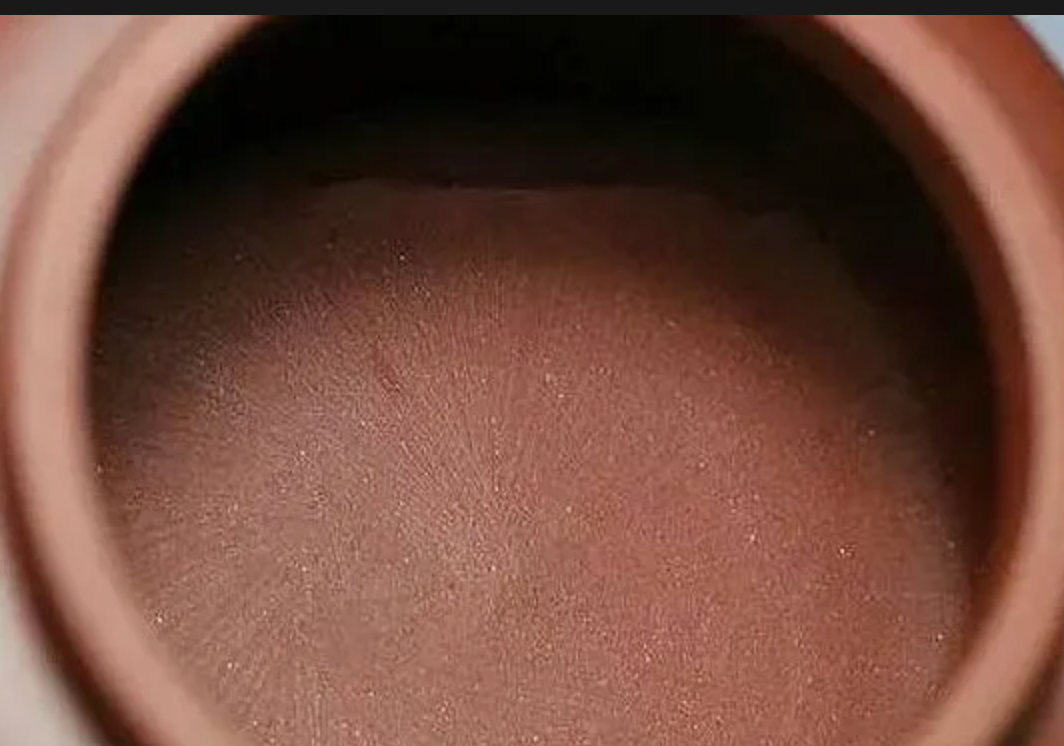
🔸 Sun Pattern (Tai Yang Xian)
Radial patterns often appearing at the base of teapots.
🔸 Slip Casting (Guan Jiang)
Industrial molding process using liquid clay—non-authentic Zisha method.
🔸 Batch Production (Yi Shi)
Producing multiple identical teapots in one production cycle.
🔸 Inner Mold / Outer Mold
Tools used for shaping clay during forming process.
🔸 Clay Patching (Fu Ni)
Adding clay to correct shape transitions.
🔸 Clay Inlay (Xiang Ni)
Embedding different clay colors into carved patterns.
🔸 Wet Carving / Dry Carving
Engraving designs before or after full drying.
🔸 Water Channel (Shui Kong)
The internal passage connecting spout and body for water flow.
🌿 Core Craft Philosophy
We only support:
✔ Handmade & semi-handmade teapots
✔ Natural mineral clay
✔ No slip casting or machine production
✔ No artificial chemical clay
✔ Focus on practical brewing performance
✔ Honest craftsmanship without exaggerated titles
We do not promote “master artist labels” or fake collectible hype. Our focus is real functionality and authentic tea experience.
🌍 Explore Our Collection
👉 Premium Handmade Yixing Zisha Teapots
https://specialtyshoponline.com/product/premium-handmade-yixing-zisha-teapots-collection-authentic-zini-zhuni-clay-tea-pots-free-worldwide-shipping/
👉 Browse All Yixing Teapots
https://specialtyshoponline.com/product-category/handcrafted-traditional-chinese-specialty-products/yixing-zisha-teapots/